
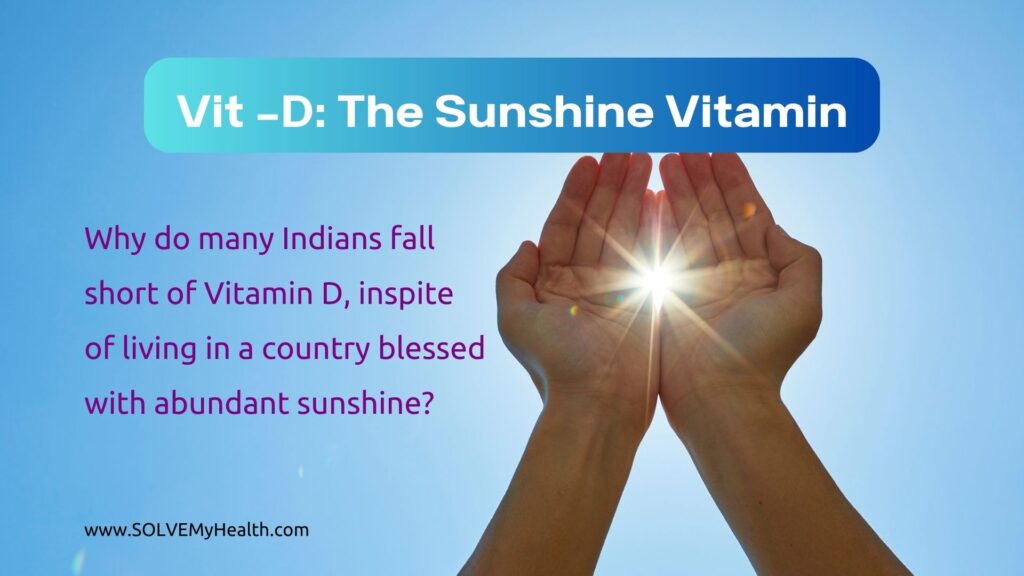
Did you know that up to 80% of Indians are Vitamin D deficient, despite living in a country blessed with abundant sunshine?
In other words, it means there is an 80% chance that you, as an Indian, could be deficient in Vit-D! 8 out of 10 Indians – young adults, elderly, office professionals, homemakers, even athletes are living with a deficiency that silently impacts bones, immunity, mood, hormones, inflammation, cardiovascular health and even long-term disease risk.
This isn’t now fast becoming more than a nutritional gap – it’s slowly becoming a widespread public health crisis.
What Exactly Is Vitamin D?
A nutrient… and a hormone! Yes, vitamin D is not just a vitamin. It behaves like a pro-hormone, influencing more than 200 genes and participating in processes far beyond bone health.
Vitamin D plays a critical role in:
- Calcium & phosphorus absorption
- Bone mineralization
- Muscle contraction
- Nerve conduction
- Immune system regulation
- Cell growth, differentiation & inflammation
- Brain development and mood regulation
- Prevention of chronic diseases like diabetes, cancer and heart disease
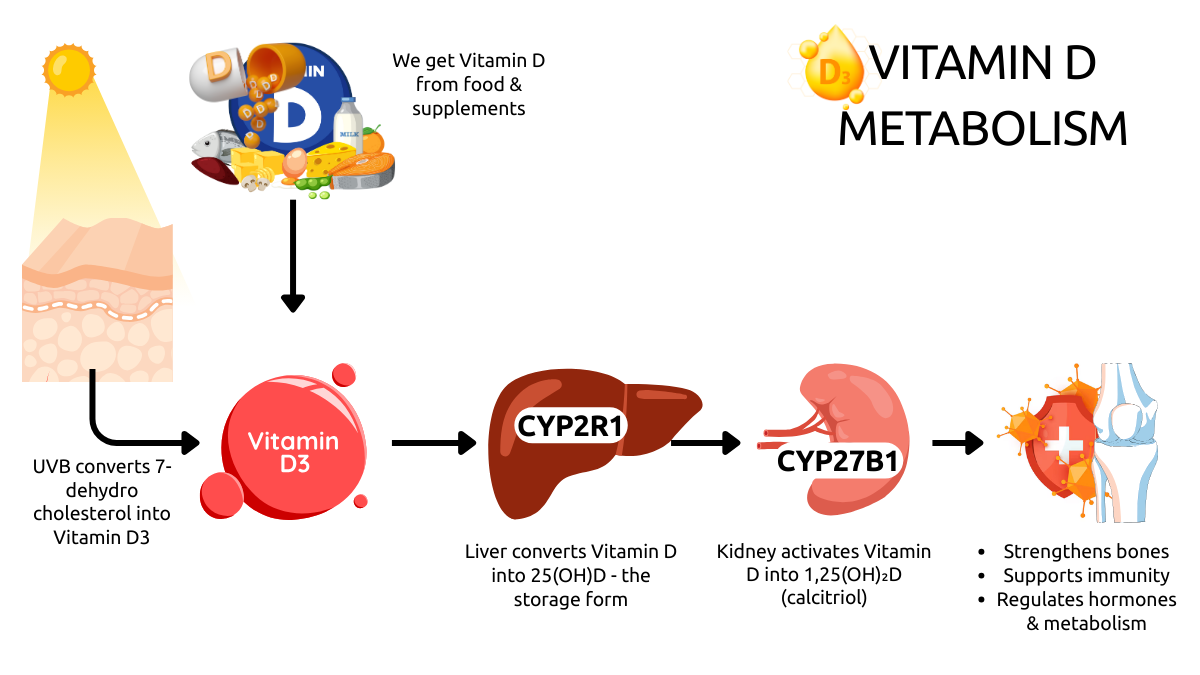
Vitamin D is involved in almost every system in the body. Unlike most vitamins, Vitamin D is not just obtained from diet, your body can synthesize Vitamin D3 naturally when your skin is exposed to UV-B sunlight.
Also Read: Metabolism – Can you increase or improve?
D2 vs D3: What’s the Difference and Why Does It Matter?
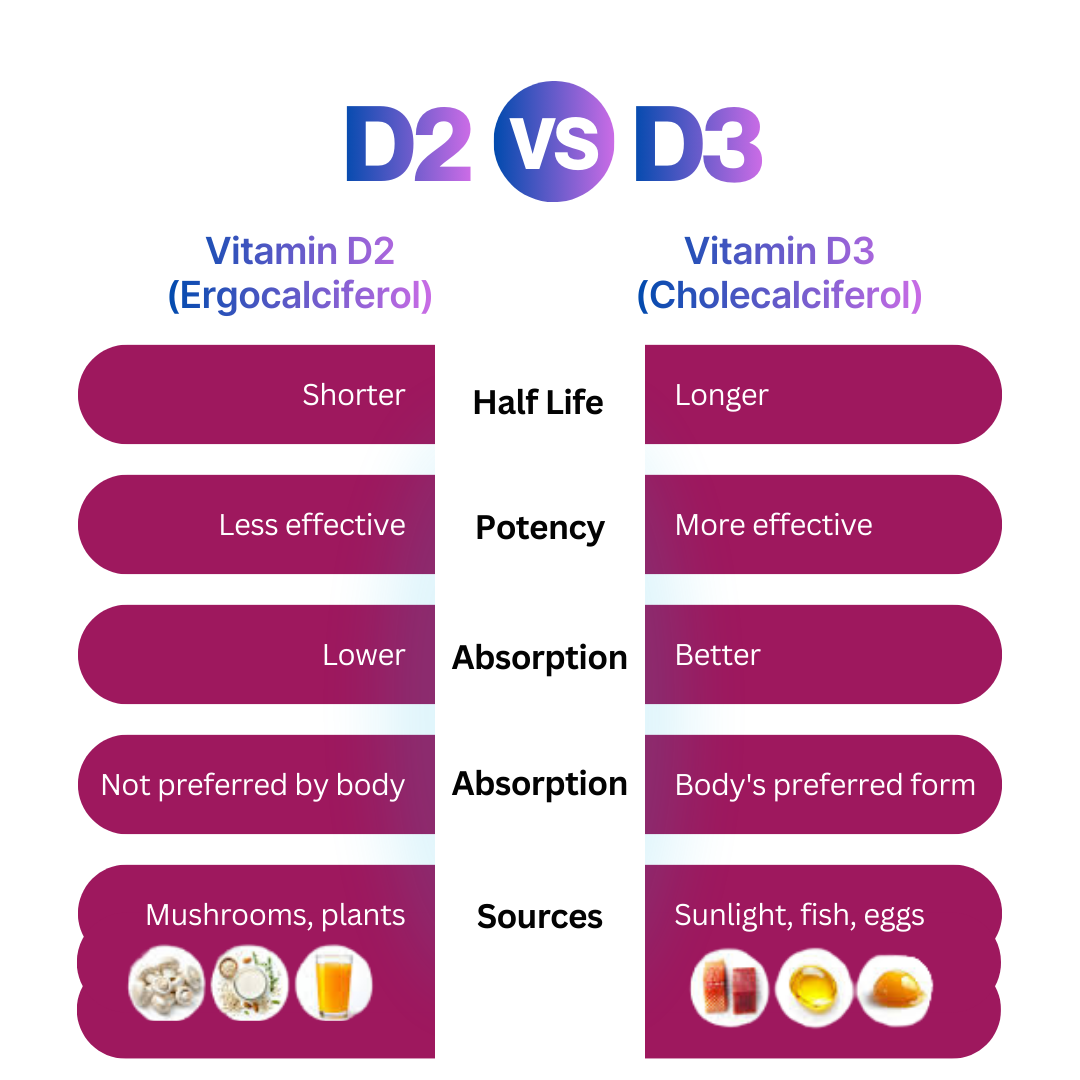
There are two major forms of Vitamin D:
1. Vitamin D2 (Ergocalciferol)
- They come from plant sources such as mushrooms, that are exposed to UV light
- Also known as ergocalciferol, it is less effective in raising our blood Vitamin D levels. It also has a shorter half-life
2. Vitamin D3 (Cholecalciferol)
- D3, also known as cholecalciferol is the form that our skin produces when exposed to sunlight.
- It is also found in animal-based foods like fish, egg yolk, fortified foods
- It is more potent, longer-lasting, and better absorbed than D2
Simply put, Vitamin D3 is the body’s preferred form. This is why doctors worldwide recommend D3 supplements over D2, especially for deficiency correction.
Why Vitamin D3 Matters – The Critical Role in Your Body
Vitamin D3 is biologically active and binds with the Vitamin D Receptor (VDR) in cells throughout the body.
1. Bone Health & Calcium Regulation
- Enhances intestinal calcium absorption and enables bone mineralization
- Deficiency can lead to osteoporosis, osteomalacia, fractures, and rickets in kids
2. Immune Function & Autoimmunity Prevention
- Vit-D also regulates innate + adaptive immunity
- It may reduce risk of infections, autoimmune conditions, inflammatory disorders
3. Chronic Disease Prevention
- Vit-D does play a role in certain conditions like – Diabetes, Hypertension, Cardiovascular diseases, Colorectal and breast cancer, Multiple sclerosis and, Depression
4. Maternal & Child Health
Low D3 affects fertility and impair the fetal development.
- Low D3 affects fertility and impair the fetal development.
- It plays a role in childhood immunity and bone health
Why Is Vitamin D Deficiency So High in India?
Despite being a sun-rich country, India has some of the highest Vitamin D deficiency rates in the world, with studies showing that 70-90% of Indians have deficiency (<20 ng/ml) and 70-95% have insufficiency (<30 ng/ml) and what’s even more surprising is that younger adults aged 18-30 are now among the most affected groups. So even with abundant sunlight, modern lifestyle patterns, indoor routines, pollution, poor diet, cultural practices and metabolic health issues have together created a silent public-health crisis where the people who need Vitamin D the most are often the ones getting the least.
Reason 1: Lack of Sun Exposure (The Urban Lifestyle Trap)
Sunlight accounts for up to 90% of your body’s Vitamin D production, yet modern life in India makes meaningful sun exposure surprisingly rare. Most people spend the entire day indoors at work or college, miss the morning sun due to early commutes, and apply sunscreen that blocks UVB rays. In many cities, air pollution acts as a barrier, preventing UVB from reaching the skin. On top of that, covered clothing and the strong cultural fear of tanning or getting darker further reduce exposure. Together, these factors create a lifestyle where even in a sun-rich country, the body receives very little usable sunlight.
Reason 2: Darker Skin = Less Vitamin D Production
Indians generally have higher melanin levels. Melanin acts like a natural sunscreen—great for sun protection, not so great for Vitamin D. Darker skin needs 3–5 times more sun exposure to produce the same amount of Vitamin D as lighter skin. This means even those who “feel like they get enough sunlight” often don’t.
Reason 3: Vegetarian Diets Provide Almost No Vitamin D
Traditional Indian diets are Predominantly vegetarian, Low in fortified foods and Low in fatty fish (the only natural rich source). Foods with meaningful amounts of Vitamin D3 include Salmon, Sardines, Cod liver oil, Egg yolk and Fortified milk or cereals. Even then, dietary sources usually cover only 10–20% of daily requirements. This makes sunlight and supplementation necessary, not optional.
Reason 4: Cultural Factors
Several cultural and social norms contribute to the problem:
- Clothing styles that fully cover arms and legs
- Indoor, sedentary social lives
- Avoidance of tanning
- Lack of outdoor physical activity, especially for women
- Limited outdoor time for children
- Social expectations to stay indoors during daytime heat
- No national-level food fortification programs
Put together, it creates the perfect storm.
Reason 5: Lifestyle Disorders & Medical Factors
One of the most overlooked reasons is the rise of modern lifestyle disorders. These conditions don’t just reduce Vitamin D levels—they interfere with its production, absorption, activation and usage at almost every step.
Metabolic Conditions That Worsen Deficiency
Chronic conditions such as obesity, PCOS, metabolic syndrome, fatty liver disease, Type 2 diabetes and persistent inflammation have become common even among young adults.
Here’s how they disrupt Vitamin D metabolism:
- Obesity: traps Vitamin D inside fat tissue, making it unavailable
- Insulin resistance and inflammation: disrupt Vitamin D receptor sensitivity
- PCOS and hormonal imbalance: raise the body’s demand for Vitamin D
- Fatty liver: reduces the organ’s ability to convert Vitamin D into its usable form
Together, these conditions reduce Vitamin D bioavailability while increasing the body’s requirements.
Gastrointestinal Disorders
Several medical conditions can dramatically impair the body’s ability to absorb Vitamin D, leaving individuals deficient. Conditions such as celiac disease, Crohn’s disease, ulcerative colitis, cystic fibrosis, chronic pancreatic insufficiency and those who have undergone gastric bypass surgery often damage or alter the gut and pancreas in ways that reduce nutrient absorption, making Vitamin D deficiency far more likely and significantly harder to correct without addressing the underlying medical issue. Because Vitamin D is a fat-soluble vitamin, people with these conditions often remain deficient even with supplements.
Decreased Natural Synthesis
Even with abundant sunlight, the body may struggle to produce enough Vitamin D due to several biological and lifestyle factors. Aging skin has a reduced ability to synthesize Vitamin D, while darker skin tones contain more melanin, which naturally lowers UVB absorption. Individuals who experience long hospital stays or institutional living, as well as those who use sunscreen consistently, also produce significantly less Vitamin D. This is why many elderly individuals—especially those who spend most of their time indoors—remain deficient despite living in sunny climates.
Liver and Kidney Dysfunction
Vitamin D must undergo two activation steps before the body can use it – first in the liver, where it is converted to 25-hydroxy Vitamin D and then in the kidneys, where it becomes the active hormone 1,25-dihydroxy Vitamin D. When these organs are compromised, this activation process is disrupted. Conditions such as cirrhosis, chronic kidney disease and hypoparathyroidism significantly impair Vitamin D metabolism, making deficiency more severe.
Medications That Deplete Vitamin D
Certain drugs accelerate Vitamin D breakdown like Phenobarbital, Carbamazepine, Rifampin, Dexamethasone, Nifedipine, Spironolactone. Long-term users require careful monitoring.
Cofactor Deficiencies
Vitamin D doesn’t act alone. Its effectiveness depends on Magnesium (essential for activation), Calcium, Vitamin K2, Zinc and Omega-3 fatty acids. Low levels of these nutrients impair everything from Vitamin D activation to receptor binding. This means even people with “normal” Vitamin D levels may still experience deficiency symptoms if these cofactors are low.
The Health Consequences of Vitamin D Deficiency
It’s not just about bones anymore.
1. Bone and Muscle Problems
- Weakness
- Muscle pain
- Fatigue
- Increased fracture risk
- Osteopenia & osteoporosis
- Rickets in children
2. Immunity Impairment
Low Vitamin D has been linked to:
- More frequent infections
- Poor recovery
- Increased inflammation
3. Increased Risk of Chronic Diseases
Research is exploring connections with:
- Diabetes
- Cardiovascular disease
- Obesity
- Some cancers
- Multiple sclerosis
- Autoimmune conditions
4. Mental Health Effects
Low Vitamin D is associated with:
- Depression
- Brain fog
- Low mood
- Increased fatigue
5. Pregnancy Complications
- Low birth weight
- Pre-eclampsia risk
- Gestational diabetes
- Poor fetal bone development
Vitamin D plays a role in more than we ever imagined.
How Do You Check Your Vitamin D Levels?
The gold-standard test is:
25-Hydroxy Vitamin D [25(OH)D]
Interpretation
| Vitamin D Level | Status |
| <20 ng/ml | Deficient |
| 20–29 ng/ml | Insufficient |
| ≥30 ng/ml | Sufficient |
Most Indians fall in the deficient or insufficient categories – even those who feel “perfectly healthy.”
Why Vegetarian Diets Make Vitamin D Deficiency Worse
Vegetarian foods are naturally low in Vitamin D.
Here’s what’s missing:
| Food | Vitamin D |
| Vegetables | ❌ None |
| Fruits | ❌ None |
| Grains | ❌ None |
| Dals & legumes | ❌ None |
| Milk (regular) | Very small |
| Mushrooms (sun exposed) | Small amounts of D2 |
Without Fatty fish, Fortified foods, Eggs and Sun exposure vegetarians face an even greater deficiency risk. This is why dieticians and doctors often recommend fortified milk, fortified plant-based milk and Vitamin D3 supplements
How to Improve Vitamin D Levels Naturally
Vitamin D deficiency is both preventable and reversible.
1. Get Smart Sun Exposure
Best time: 10 am – 2 pm
Duration: 15 – 30 minutes (varies with skin tone)
Expose arms, face, legs if possible
Avoid sunscreen during exposure (apply later)
2. Add Dietary Sources
Include more:
Fatty fish
Egg yolks
Fortified milk
Fortified oats or cereals
Vitamin D3 fortified plant milk
3. Supplement Wisely
Typically recommended:
1,000 – 2,000 IU / day for maintenance
Higher doses only under medical supervision
Always check your levels before starting high-dose therapy.
4. Improve Gut Health
Vitamin D absorption is improved when:
Taken with healthy fats
Gut microbiome is balanced
Add Nuts, Seeds, Avocado and Probiotics (curd, lassi)
Vitamin D deficiency is a silent epidemic-particularly in India-affecting children, adults and seniors across all regions. Despite abundant sunlight, our lifestyle, diet and environmental changes have made deficiency almost unavoidable.
But, Vitamin D deficiency can be reversed easily.
Once we understand the difference between D2 & D3, making smart sunlight choices, improving your diet and supplementing wisely, you can dramatically improve your immunity, mood, bone health, hormonal balance and long-term disease risk.
Here’s your challenge for this week:
Pick one of these actions and commit to it:
Get 20 minutes of sunlight
Add egg yolks or fortified foods
Start a Vitamin D3 supplement (if advised by doctor)
Book a Vitamin D test
Then share in the comments:
Which strategy did you choose and how did it make you feel?
Taking care of your Vitamin D is a small step that pays massive health dividends.
Stay informed, stay proactive – and stay ahead in your health journey.